
The Office as a Retention Tool: Why Space Still Matters
A talented senior leaves. The exit interview says "a better offer elsewhere." Convenient. The real story is usually sitting in your office: the meeting room that's always booked, the chair nobody has quite fixed, the sense that the space is fine rather than forward-looking.
When leaders talk about retention, the conversation starts with pay, leadership and workload. Fair enough, those matter. But there's a factor that gets underestimated because it doesn't show up on a spreadsheet: the physical workplace.
This isn't a design argument, it's an evidence one. The Chartered Institute of Personnel and Development links supportive working environments with higher engagement and stronger intent to stay, particularly where wellbeing is treated as a performance enabler rather than an add-on. The space around people shapes how they feel about staying, whether anyone in the business has clocked that or not.
The visibility problem
In a tight labour market, employers get compared quickly, especially in finance, legal and tech, and word about what it's actually like to work somewhere travels fast. Labour market reporting across competitive economies keeps showing the same pattern: vacancies at or near historic highs, which matches what most HR teams already feel in their bones. Competition for skilled people isn't a phase, it's the new normal. In that environment the office is not a neutral backdrop. Daily friction, physical, acoustic, social, quietly turns into a retention risk.
If you're running a 30 to 100 person business, the real question isn't do we have enough desks. It's what frictions people are absorbing every day, and what those frictions are quietly costing you in loyalty, energy and reputation. Those costs don't show up on an invoice. They show up eighteen months later in a resignation letter.
What people actually want from the office
Steelcase stands apart from most manufacturers. Alongside being one of the world's largest office furniture producers, it runs one of the most advanced workplace research programmes in the industry, with global R&D teams studying real employee behaviour to work out what actually helps people. Public reporting shows tens of millions invested annually in that research, which is why corporate real estate teams keep coming back to its findings. One insight stands out: people who like their workspace report markedly higher engagement, stronger connection to culture and better perceived productivity.
One theme runs through all of it: community. People stick around for the office that supports collaboration and belonging, not just the one that lets them complete tasks. Give people a place where they connect and feel part of something, and its value goes well beyond the square footage.
Three levers employers can actually move
For a typical 30 to 100 person employer, the gains usually come from a few practical levers, not a full rebuild.
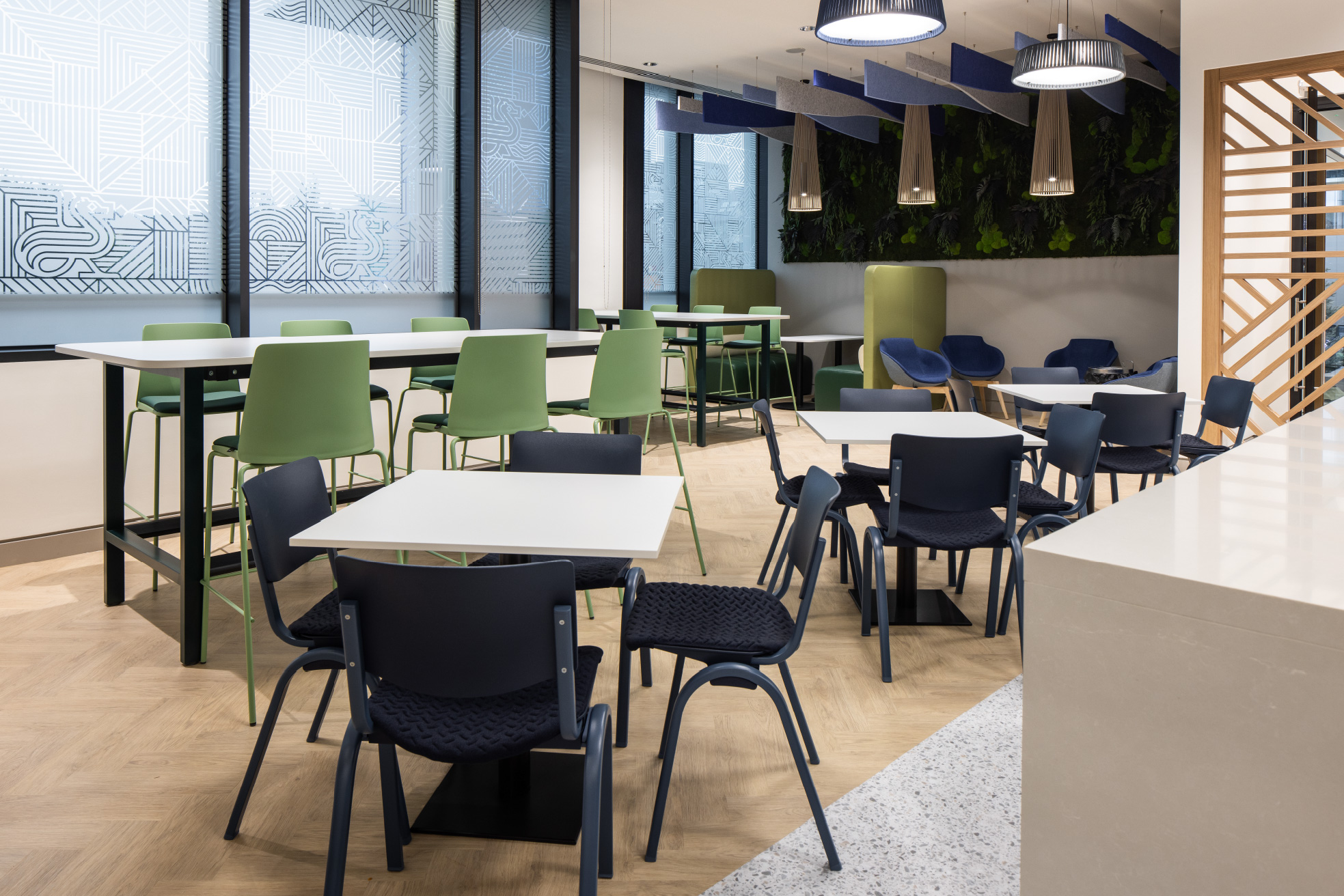
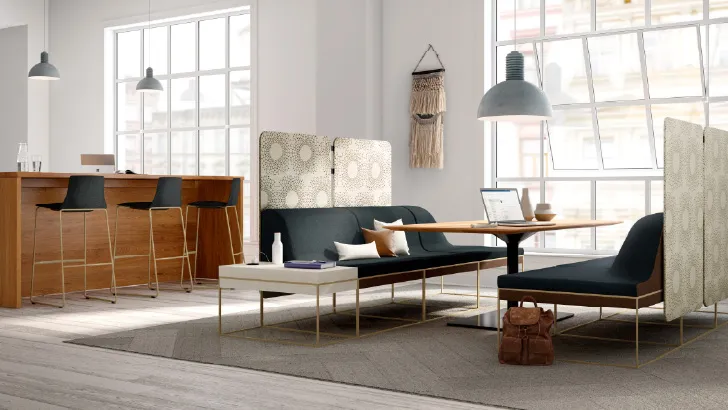
Breakout and social spaces. People don't stay for tasks alone, they stay for relationships. Informal seating and breakout zones aren't a perk, they're infrastructure: this is where the conversations happen that never justify a meeting invite but matter enormously for culture and mentoring. Orangebox has built its whole reputation on acoustic pods and soft seating designed for exactly this. Neo Office typically specifies commercial-grade solutions built for heavy use, with aftercare so these spaces don't quietly become the tatty corner with the broken sofa.
Meeting and collaboration spaces. If the office is going to justify the commute, it has to earn its keep as a place to collaborate. Leesman's workplace effectiveness research points to informal interaction and knowledge sharing as some of the most valuable things an office enables, full stop. When meeting rooms are awkward to book, poorly equipped or acoustically weak, the office loses one of its best reasons to exist.
Visual quality and finish. This isn't superficial, it's behavioural. An office that feels tired, mismatched or permanently temporary sends a signal about investment, and high performers clock it even when they don't say so out loud. William Hands builds boardroom tables and executive furniture around longevity rather than showing off. Targeted investment in client-facing rooms and senior collaboration spaces can shift perception from good enough for now to this organisation is going somewhere.
Fixing the small things fast
Retention isn't only about installation day. It's about what happens after: monitors move, teams reconfigure. Chairs need adjusting, constantly. People aren't furniture. Colebrook Bosson Saunders' ergonomic monitor arms solve a specific, recurring frustration: poor screen positioning leads directly to strain. Neo Office's job is dealing with these details before they turn into stories. Word travels fast when a supplier shows up for the small stuff. It travels just as fast when they don't.
A sharper conclusion
Leaders can't control every reason someone chooses to stay. Housing, family, global mobility, all of that sits well beyond any one organisation. But the experience of walking into your office every morning? That one's entirely on you.
Walk your space like a new recruit on their first day. Sit in the worst chair. Try to find a quiet spot at 11am. Join a call from your most awkward meeting room. Then ask yourself the hard question: if three experienced people left your team in the last 12 months, how sure are you that your office had nothing to do with it?
If the honest answer is not very, the good news is the fix is usually smaller than you'd expect. Talk to Neo Office about a walkthrough of your space. We'll tell you what we'd change first, and we won't pretend it's everything.