
From Ledgers to Lounge Spaces: The Evolution of Office Furniture
I've spent close to forty years in this industry, long enough to watch private offices give way to open-plan and meeting rooms turn into booths and pods. Churchill put it better than I could: "we shape our buildings and afterwards our buildings shape us." I've learned to read an office the way some people read handwriting. Chairs, desks, layout, they tell you exactly what that era believed work should be.
Long before my time, in the late nineteenth century, banks, railways and government offices were growing fast, and clerical work grew with them. Junior clerks sat at rows of desks with ledgers and inkwells, while senior staff occupied private rooms with larger furniture. It was the furniture that revealed the hierarchy.
Efficiency reshaped the office in the early twentieth century. Layouts borrowed from factory floors: ordered rows, standardised furniture, managers positioned to watch over the room. Furniture choice prioritised durability and storage over comfort.
Steelcase, a brand I've worked with most of my career, first appeared in this era. Founded in Michigan in 1912 as the Metal Office Furniture Company, they started out producing steel filing cases and safes, then in 1914 introduced a fire-resistant steel wastebasket, a response to the fire risk of cigarettes and wicker baskets. What now seems pretty ordinary was then a practical workplace innovation.
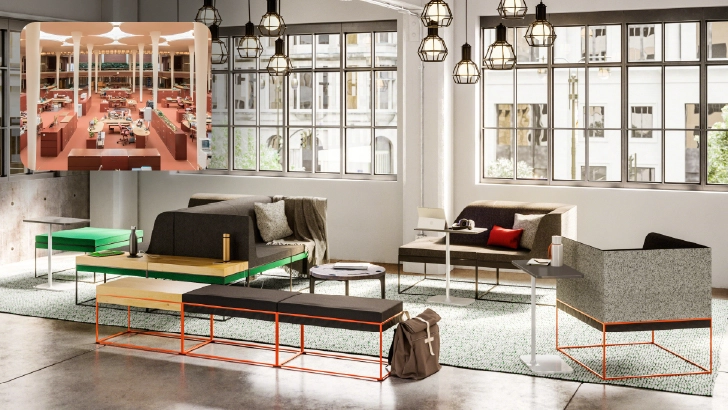
Open-plan offices appeared earlier than you may think. One example was the Great Workroom at the SC Johnson headquarters in Wisconsin, completed in 1939, where Frank Lloyd Wright designed a room of tree-shaped columns and furniture made by the company that would later become Steelcase. The photo here shows why it still gets talked about in our industry today.
After the Second World War, designers moved away from rigid rows. Bürolandschaft, German for "office landscape", arranged desks in looser groups with plants, screens and shared storage, aimed at better communication and less visible hierarchy.
"I still read an office the way I did forty years ago, by looking at what the furniture is doing for the people in it."
Steelcase kept building for it. Context, launched in 1989, was a modular desking system built around flexible core units, followed by the TNT Furniture System in 1996, both reflecting the growing influence of computers and team-based work. Typewriters gave way to computers, filing cabinets thinned out, and desks evolved to support screens, cabling and power. Attention shifted towards posture, movement, noise and different ways of working.
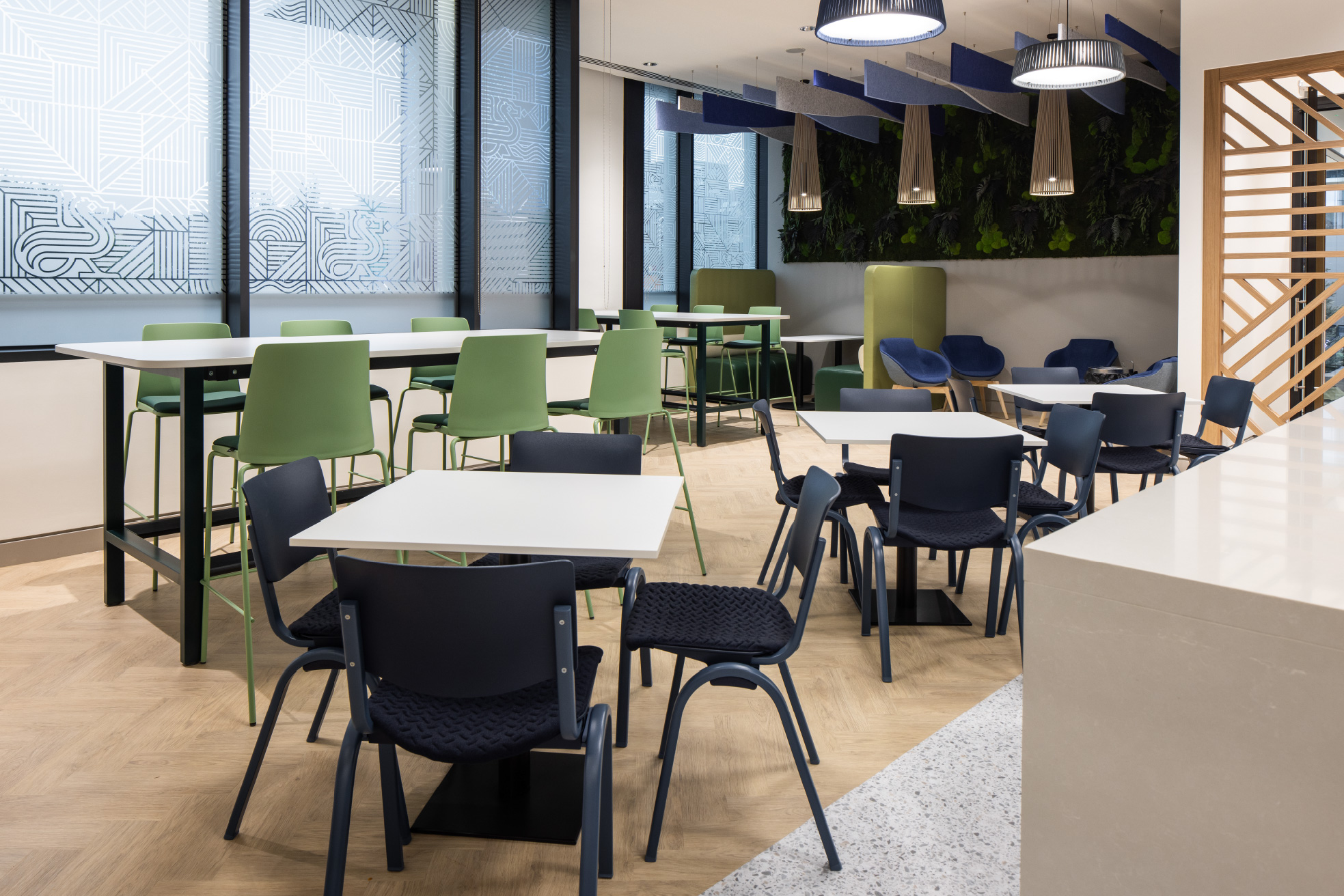
Today, traditional desks sit alongside sofas, acoustic pods, lockers, quiet rooms and project spaces. People move between settings during the day, seeking focus at one moment and connection at the next. Office design has never followed a straight line. It swings between open and enclosed, and back again, depending on what the era needed.
What's changed most is the research behind those decisions. Steelcase, the brand behind that fire-resistant wastebasket, is now known for research-led design and a deep understanding of how people work, acoustics and concentration, daylight and wellbeing, the right mix of settings to lift a team's output, not just their comfort. That's the world Neo Office works in today.
I still read an office the way I did forty years ago, by looking at what the furniture is doing for the people in it. The tools for getting that right have never been better. If you're looking at your own space and wondering how it affects your people, come and chat to me.
Paul Watson, Lead Consultant at Neo Office